A Social Learning Platform
You learn from people, not from content
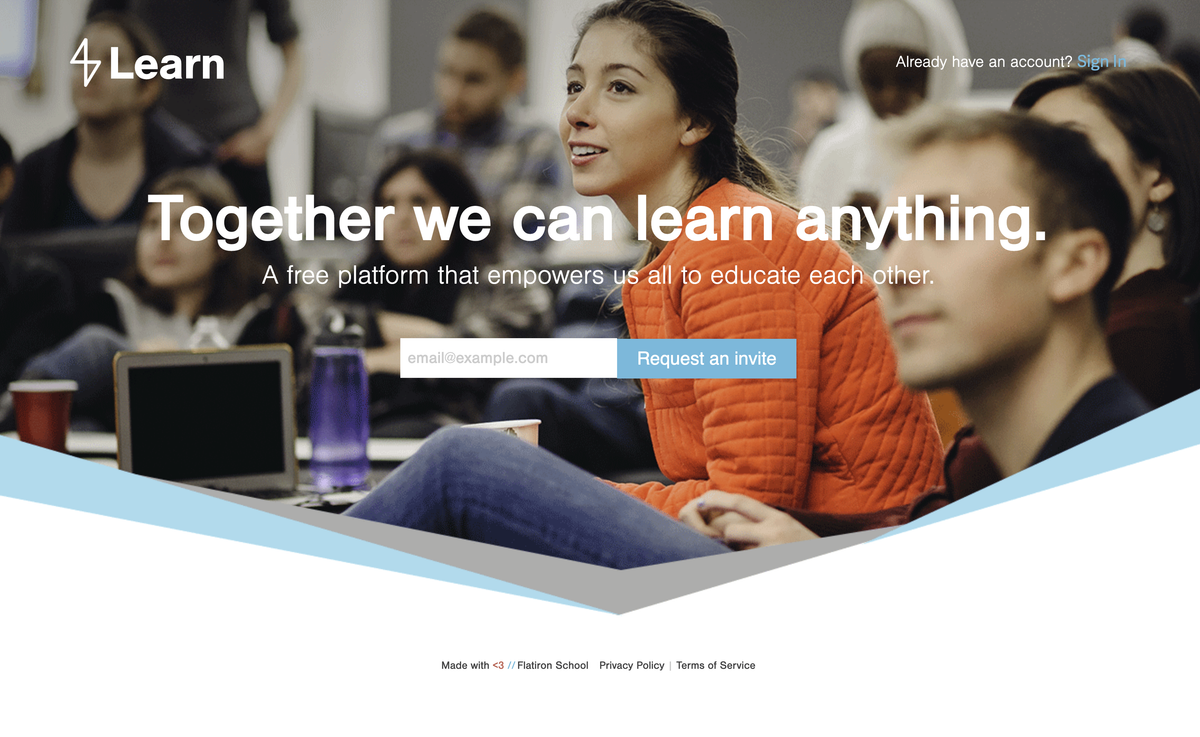
Learning is fundamentally social. Rather than treating online education as a solitary activity, Learn.co integrated community features to replicate how students naturally help each other learn.
Replicate the campus, not the classroom.
At Flatiron School, student-to-student education was magical. Learn.co was built to replicate this collaborative environment online.
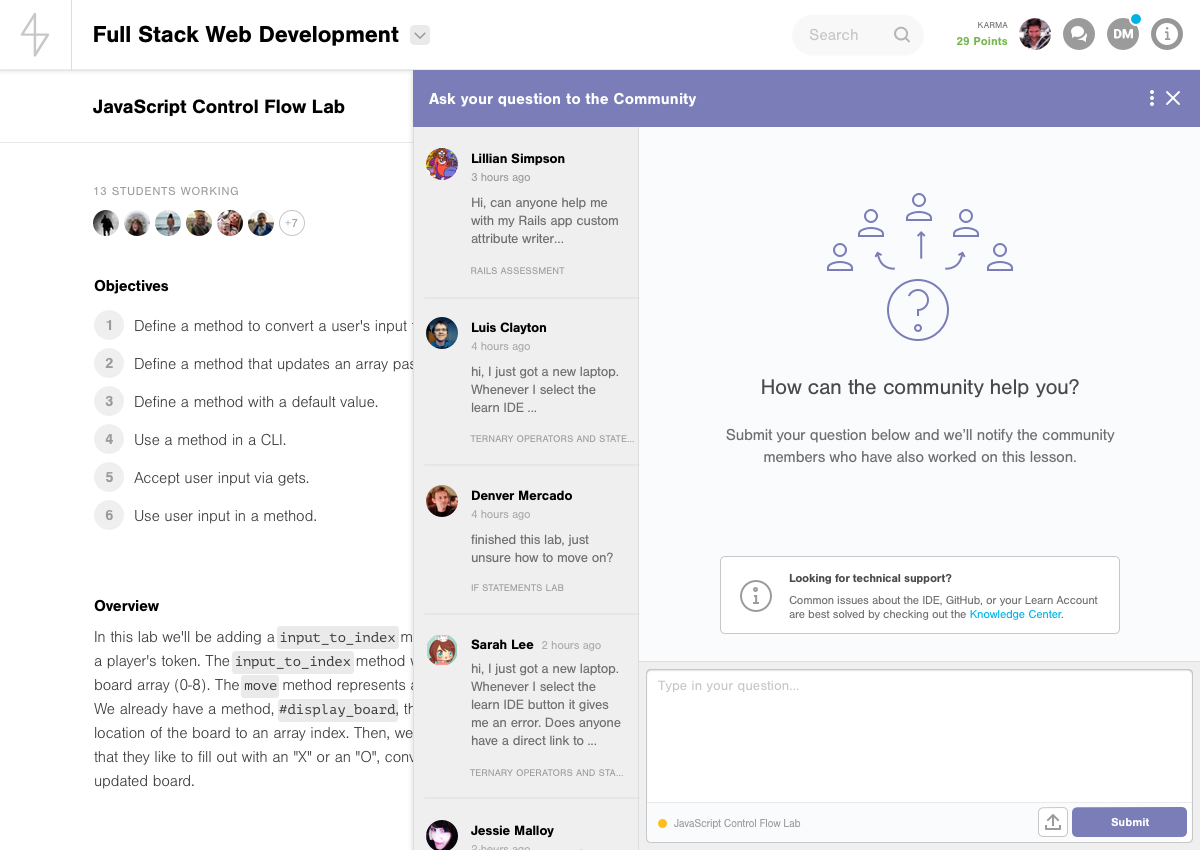
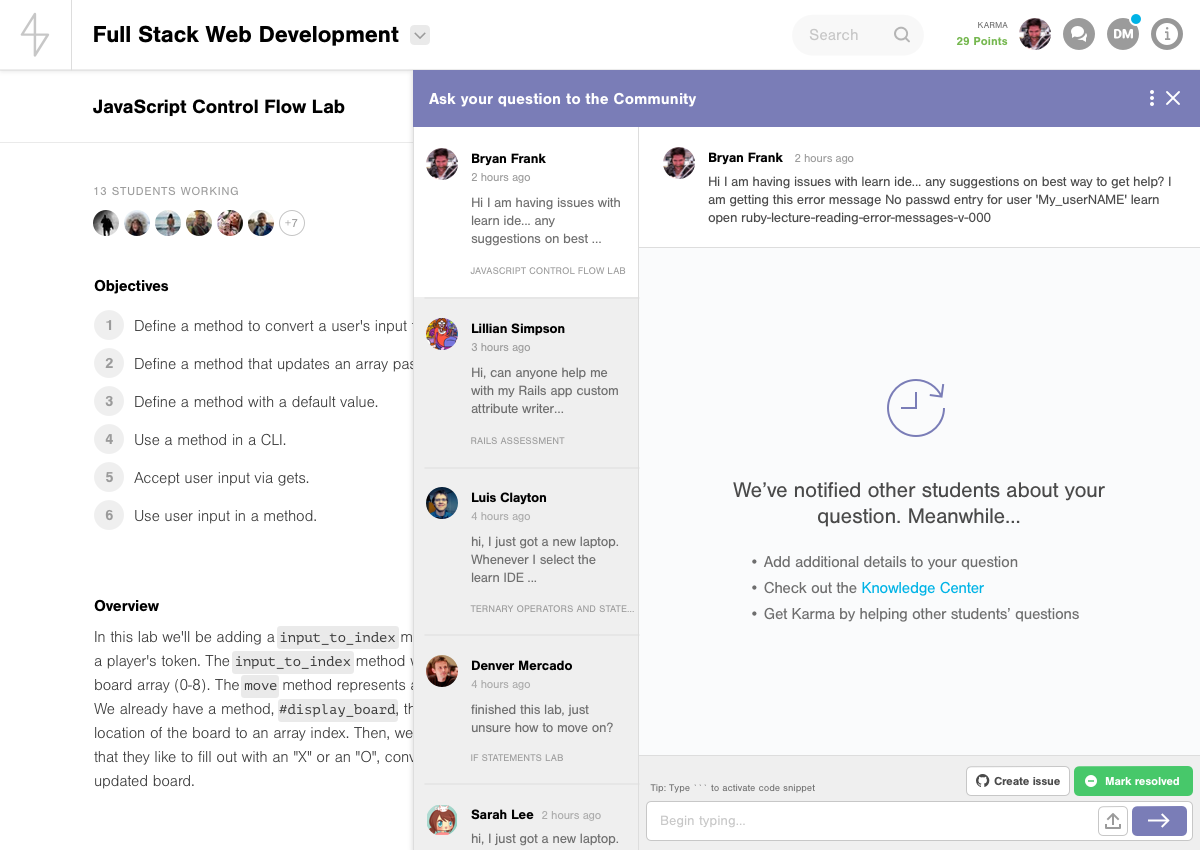
Ask a Question
Students could post questions in real-time to the community and faculty. Questions were tagged with the lesson so notifications went to relevant learners. The platform even integrated with Slack, ensuring questions reached people studying similar material.
Faculty moderated but encouraged peer-to-peer responses, recognizing that explaining concepts reinforces learning for both parties.
Study Groups
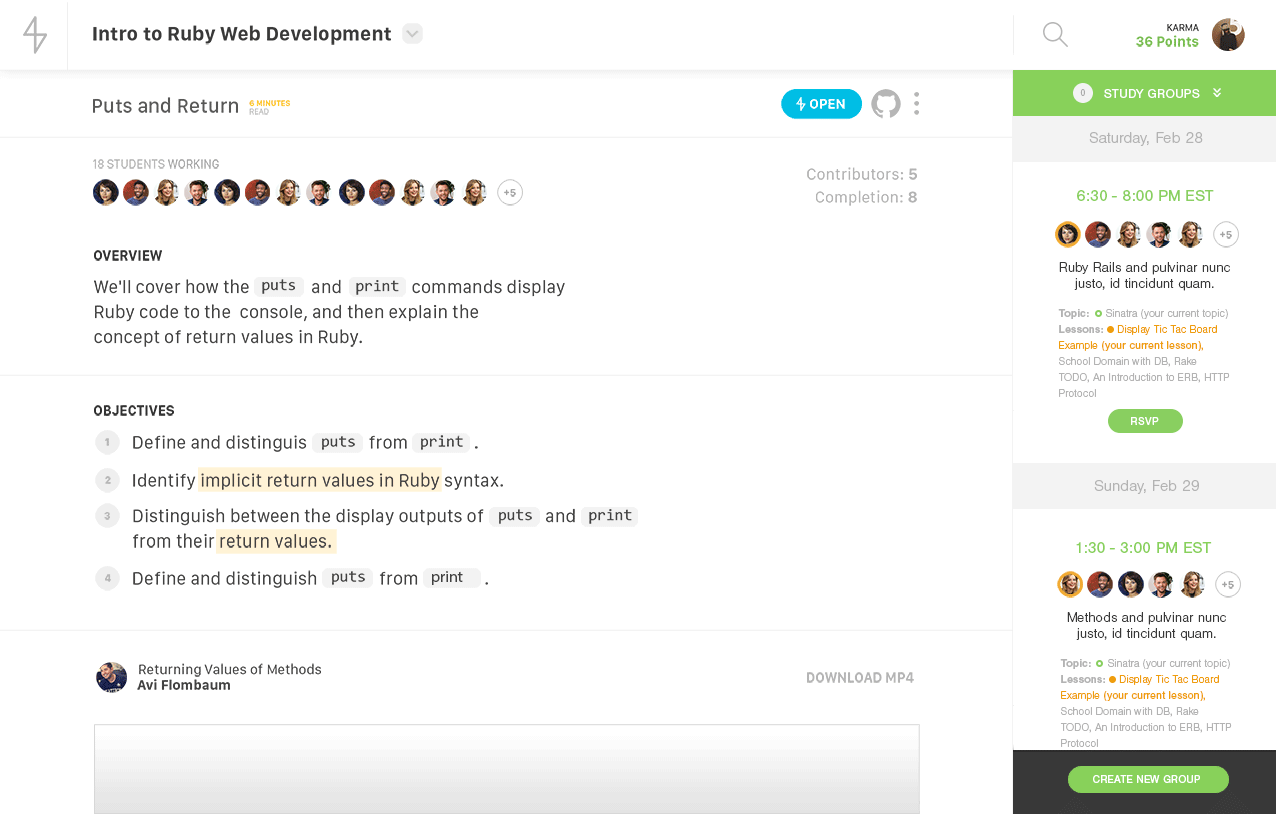
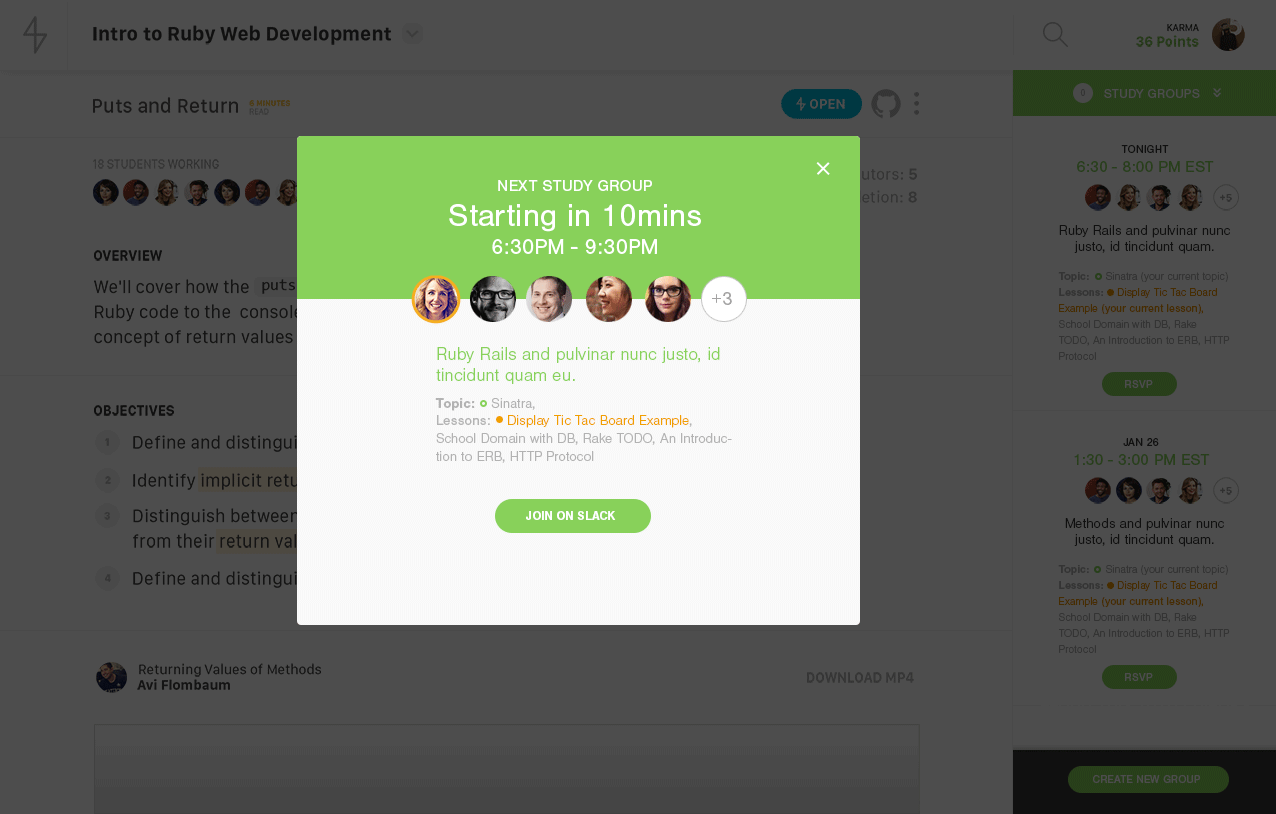
Rather than one-directional lectures, the platform enabled students to create study groups around specific topics.
Every moment of a study group is valuable because it is inherently driven by what the student wants to know.
Study groups replaced traditional lectures entirely, operating on many-to-many knowledge exchange rather than one-to-many instruction. Hundreds formed weekly with approximately 4 attendees average.
Pair Programming
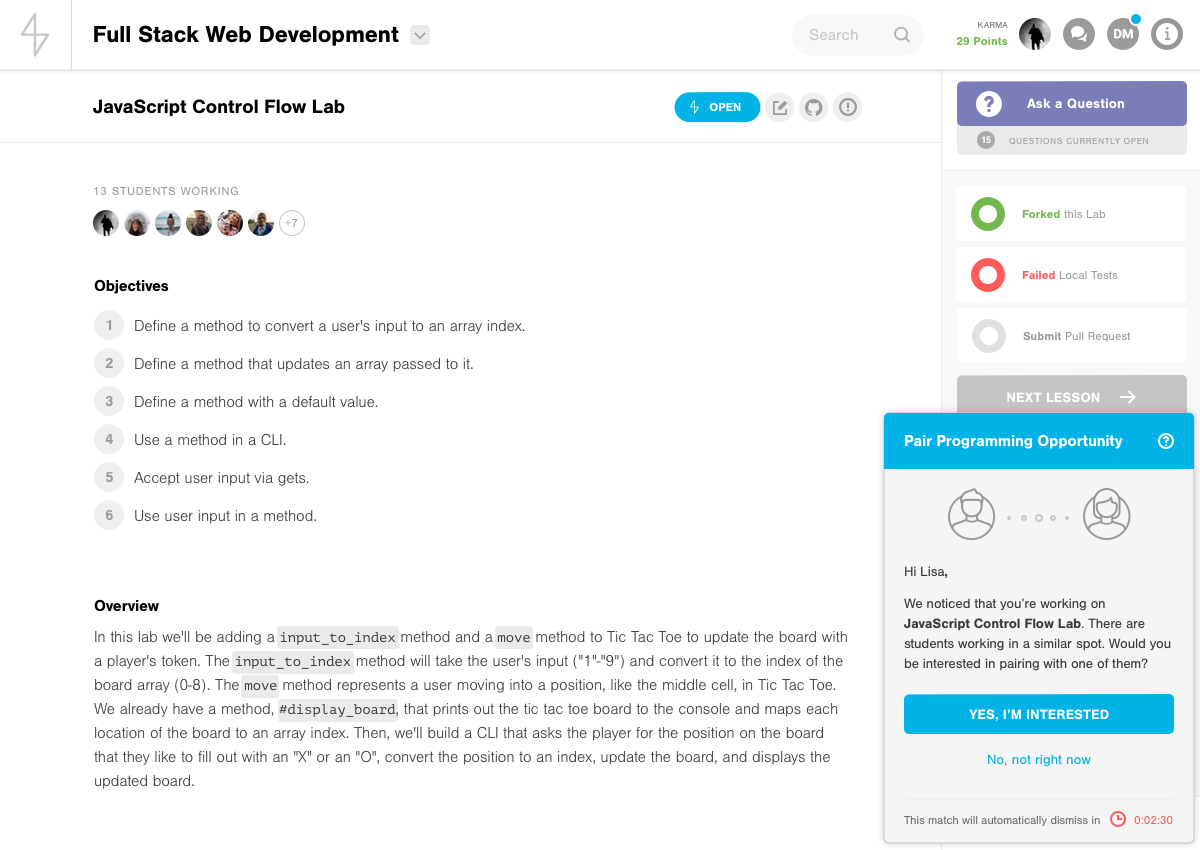
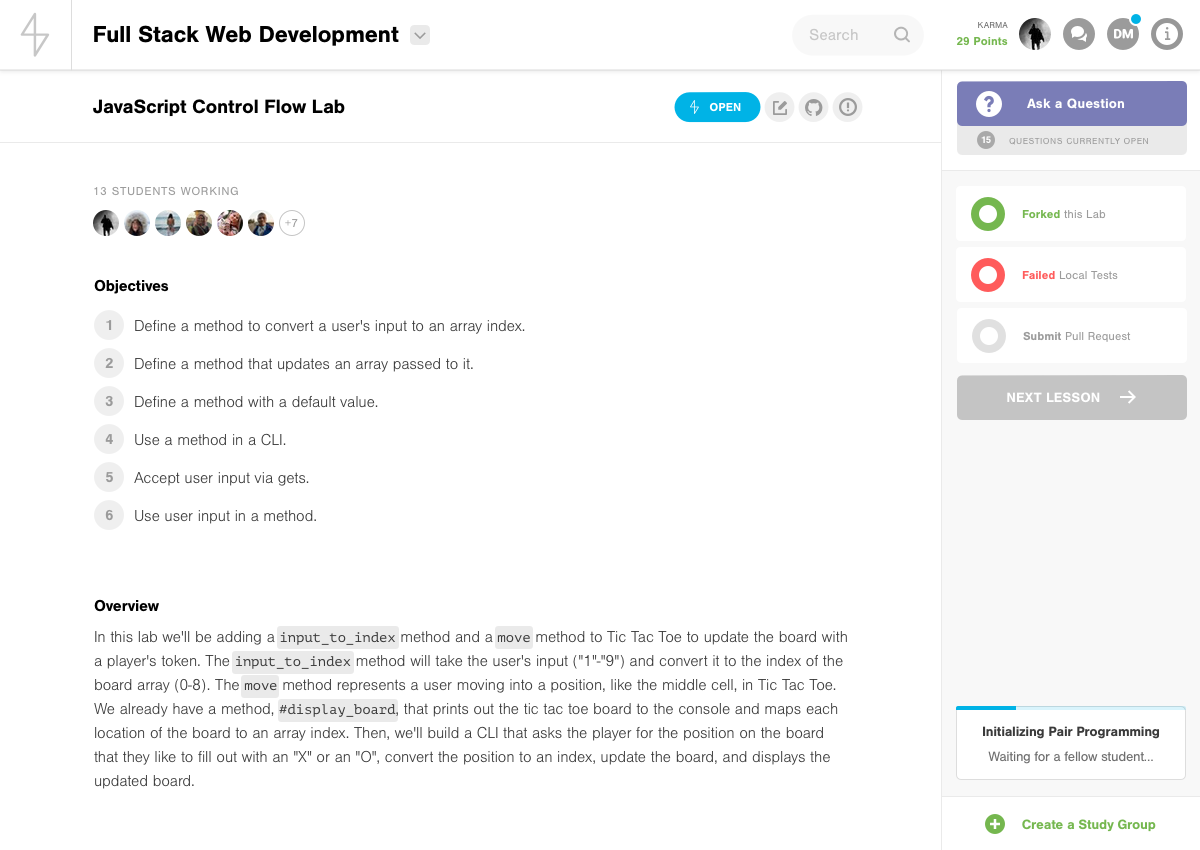
When two users accessed the same lab simultaneously, the platform surfaced pairing opportunities.
Network Effect
The more people learning, the more pairs we could form. This recreated the in-person experience of debugging together while forming learning friendships.
Technology detected when group work made sense and prompted students to connect.
Blogging
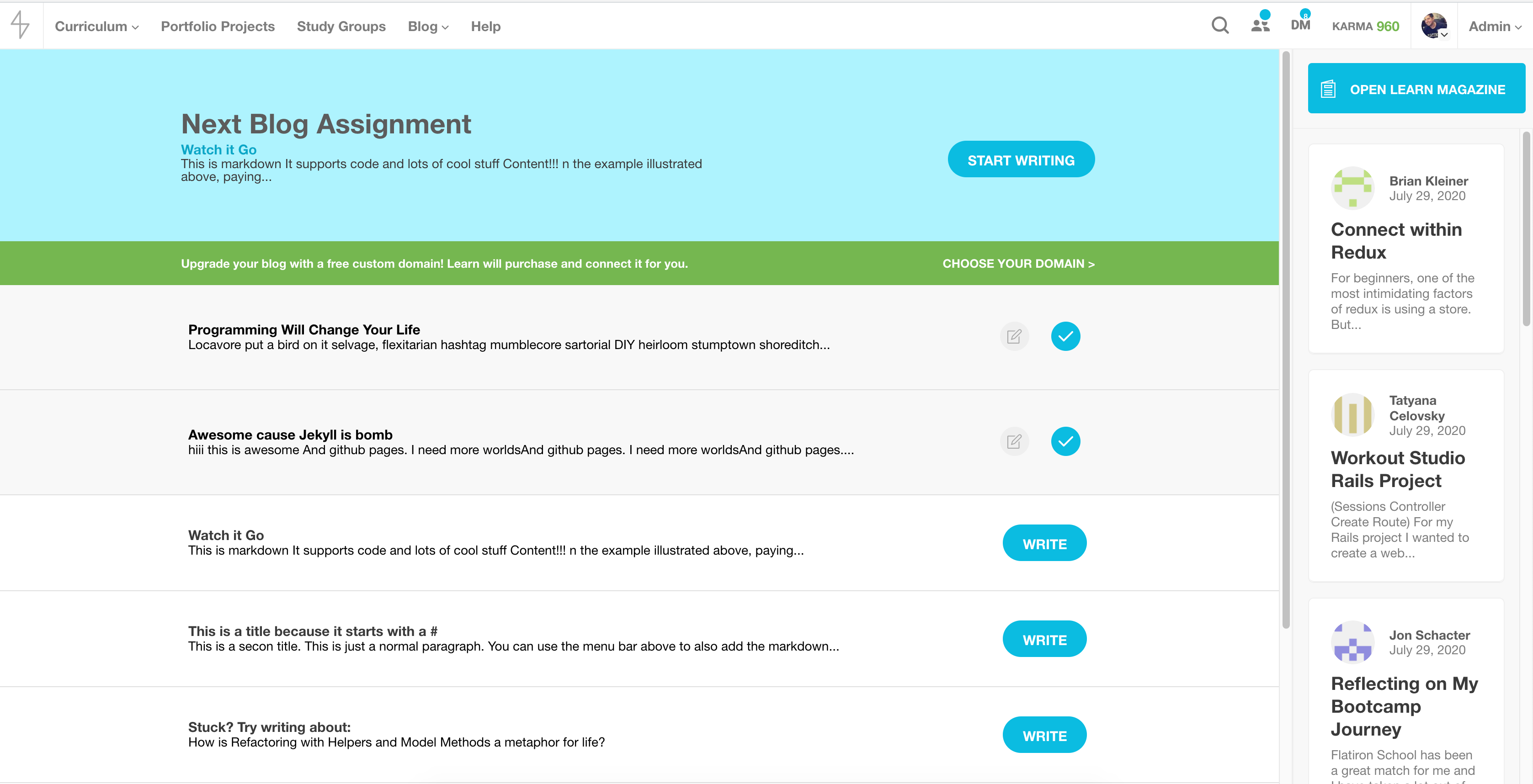
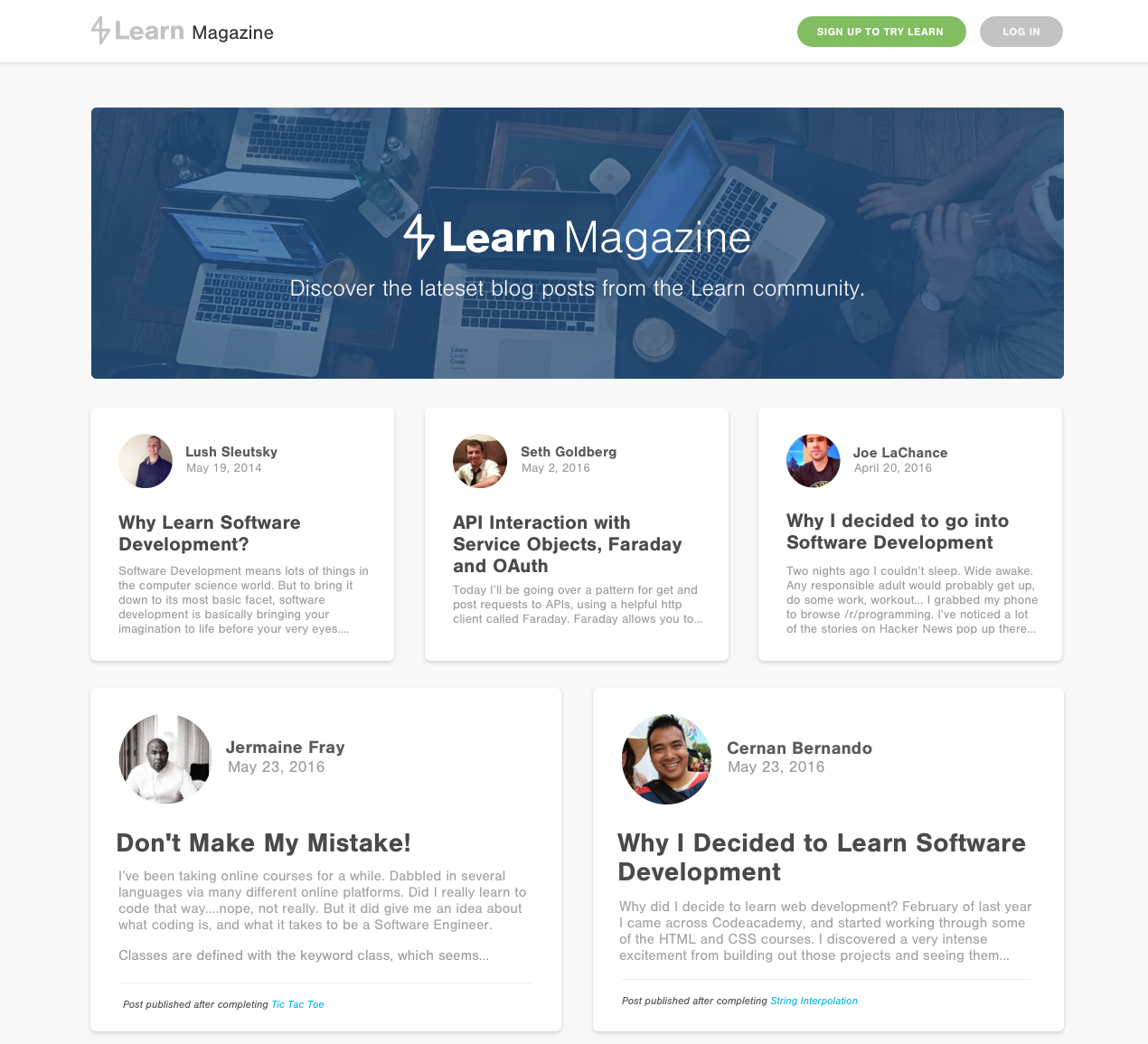
Each student received a domain and GitHub Pages blog. Weekly writing assignments created asynchronous community content.
Posts were tagged to relevant lessons, making peer writing discoverable when students needed help with specific topics. This created a living knowledge base built by the community itself.
The Philosophy
The key insight was simple but powerful: when building online learning platforms, replicate the campus, not the classroom. The magic of education happens between students, in hallways, study rooms, and coffee shops, not just in lecture halls.